




SICUR 2026 advocates training in the security sector through SICUR Academia


The speakers emphasise the importance of bringing comprehensive security closer to young people in order to attract and retain talent in companies in the sector.
Strengthening professional qualification and certification is essential to meet the new technological and regulatory challenges in fire safety.
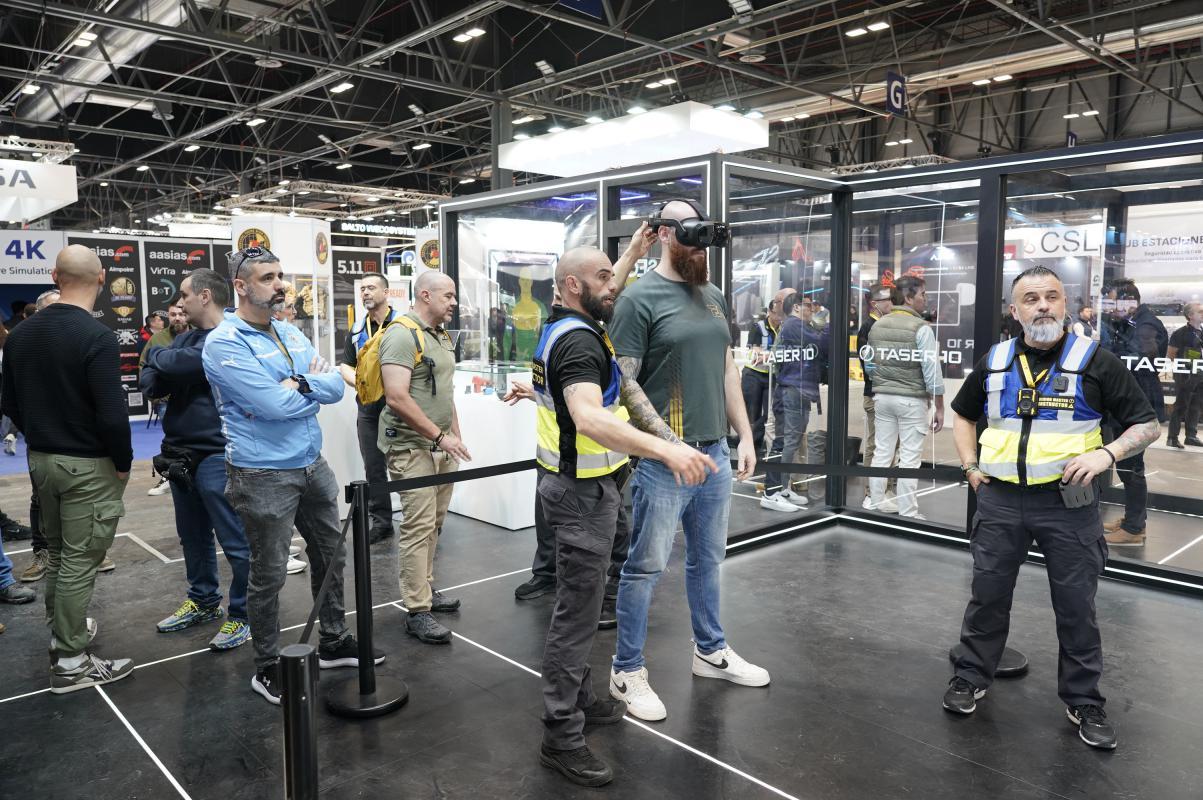
As a key new feature at its latest edition, the International Security Exhibition, organised by IFEMA MADRID, introduced an outstanding novelty on its last day: the new SICUR Academiaspace, dedicated to promoting technical specialisation and attracting young talent in the comprehensive security sector. The participants in the programme of activities and presentations included in the event advocated bringing comprehensive safety closer to young people, with the aim of attracting and retaining talent in companies in the sector; they also stated that strengthening professional qualification and certification is essential to meet the new technological and regulatory challenges in the field of fire safety, among other areas.
Alejandra Moreno, founder and president of INDESEC (Asociación de Jóvenes en Inteligencia, Defensa y Seguridad), said it is important to spread and create a security culture to allow companies to connect with young talent. "We are confident that the best way to promote such a culture is not simply through information or communications in the abstract, but through real experiences that add value and allow us to connect from the most human point of view. The world of security is not restricted to a professional prototype, but rather has room for multiple profiles in which young people can develop their careers, including engineers specialising in the development of technology for the defence industry, cybersecurity professionals, defence translators, communication journalists in large companies in the sector, and lawyers specialising in data protection, surveillance systems and public and regulatory law".
Alejandro López Palma, founder and vice-president of INDESEC, explained that "at this association, we serve as a bridge between companies and institutions with young people, both for the search for talent and for the visibility of opportunities in the sector". INDESEC was created three years ago, has 170 associates from all over Spain and collaborates with companies and institutions in the sector. Among its activities are "monthly meetings between young people and professionals in the sector; simulations of intelligence units with institutions such as the CNI (National Intelligence Centre), the CESEDEN (Higher Centre for National Defence Studies), the Armed Forces and Law Enforcement Agencies, and companies in the sector; and activities in the academic field, such as a congress on intelligence and the publication of the book 'Intelligence and decision-making: current perspectives'".
On the other hand, Antonio Escamilla, president of AES FUNDACIÓN, advocated "bringing comprehensive security closer to young people, with the aim of attracting and retaining talent at companies in the sector". He focused on the field of electronic security applied to integrated security, which includes both security and safety, as well as remote alarm management. "For young people we are quite an unknown industry, which makes it less attractive, so we want to bring it closer to them". In addition, "we want to help secondary schools to prepare their students with the technologies they will later be able to work with".
New diploma for Security Technicians
Eduardo Cobas, secretary general of APROSER, assured that the Intermediate Diploma for Security Technicians has been consolidated as a strategic reference project, aligning vocational training in the sector with the most advanced standards in Europe. "It is a direct response to an increasingly clear social and professional demand: to have specialists prepared to anticipate risks and manage dynamic and technological environments. It requires the commitment of companies, training centres and administrations to continue extending training, and requires us as a sector to remain at the forefront, continually adapting to new social demands and to technological and regulatory requirements". The backing of companies, users and trade unions, together with institutional momentum, "further consolidate its legitimacy and project it as a key pillar in value creation".
APROSER points out that the implementation of this new diploma is already a tangible success: it has around 150 students and in June 2026 it will have its first graduates. "The sector is confident that its implementation will continue to grow in new autonomous communities during the next academic year, which will presumably include Extremadura, the Principality of Asturias and the Community of Madrid. Moreover, institutional recognition is also advancing at the regional level, as shown by the Andalusian decree 8/2026, promoted by the Junta de Andalucía, which incorporates this degree as a specific merit in the competitive examinations for entry into the Local Police Forces. All this reflects the social usefulness and scope of the measure, and consolidates the figure of Security Technicians as a driving force for the advancement and professionalisation of the sector for the coming decades".
Fire protection
Also within the framework of SICUR Academia, Tecnifuego and CEPREVEN have promoted fire protection as a strategic profession for the safety of society and with high likelihood of future employment. Marta Peraza, CEO of Tecnifuego, stressed that "fire protection is a sector that saves lives and requires increasingly more qualified professionals". In this context, she highlighted the recent approval of the professional certificate of Fire Protection Installations in the field of active PCI, developed with the collaboration of both entities, as a key step forward in the professionalisation of the sector.
For his part, Jon Michelena, CEO of CEPREVEN, explained that "we are talking about a field with an employability rate of close to 98%, driven by regulation, innovation and the growing demand for safety", and defended certified training as a guarantee of quality and technical competence.
Both agreed that strengthening professional qualification and certification is essential to meet the new technological and regulatory challenges in the field of fire safety.
EXO CORNER and FORO SICUR
I EXO CORNER, Israel Benavides, an ergonomics engineer, has addressed the current use of occupational exoskeletons after 10 years of experience; and the opportunities, impediments to their use and suggestions for further implementation and acceptance. For small and medium-sized enterprises, it is vital to use external advice," he said, "and for suppliers it is essential to listen to the voice of the user. The end user decides to use the exoskeleton if he seesh more advantages than disadvantages, so the design has to be focused on the real needs of the operator".
At FORO SICUR, National Police Inspector Carlos Calvo gave a presentation on the MiDNI application as a secure digital identity solution for mobile phones, its current uses, and its future role in the relationship with administrations and the private sector. And Inspector Joaquín Caballero presented the Integral Documentation Vehicles (VIDOC) and explained their practical application in crisis situations, such as the DANA in Valencia, highlighting their role in identification and documentation in a real emergency context.
On the other hand, Asepal's SPEAKER'S CORNER continued the cycle of practical selection of PPE, today dedicated to fall protection and head protection. Also at the fair, Enrique Pérez de Tena, Joint Cyberspace Command of the MCCE's Institutional Relations Office, presented a defence and attack hackathon in a military operation.