

FX make-up: how the monsters in horror films are created


When we think of the great icons of horror, we tend to think of the monsters, killers and creatures that appear on screen. Behind many of these characters lies an artistic discipline with decades of history: FX make-up, or special effects make-up. From the disfigured faces of classic cinema to contemporary zombies and creatures, FX make-up remains an essential tool for creating fear, awe and visual credibility. MADHORROR engages directly with this craft through make-up workshops and an exhibition dedicated to DDT Efectos Especiales, the studio run by Montse Ribé and David Martí.
What is FX make-up and why does it remain important?
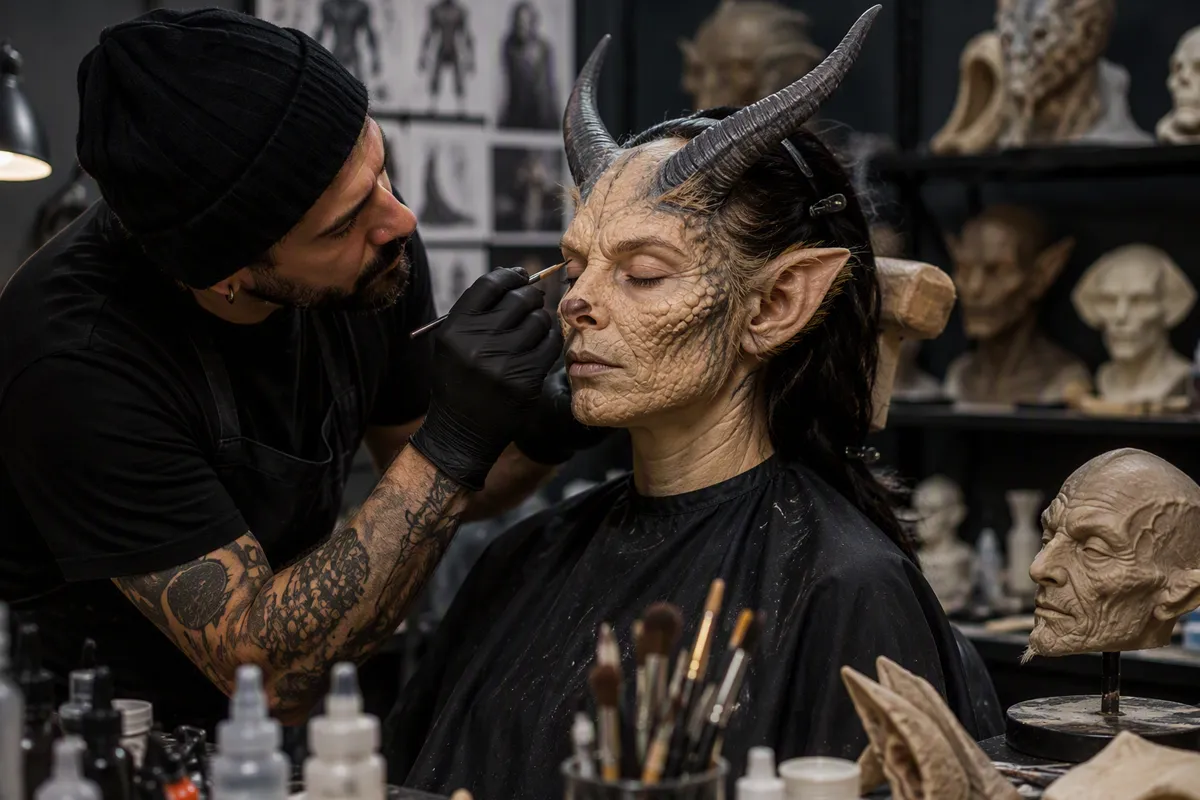
FX make-up brings together techniques designed to physically transform a person through prosthetics, sculpting, moulds, textures, body painting, hair work and the simulation of physical alterations. Its purpose is not to enhance appearance, but to build a character that appears convincing on camera and can be integrated into the narrative.
The main difference compared with conventional make-up lies in volume. Beauty make-up works on the surface; special effects can modify the apparent shape of the face or body. A well-designed prosthetic must blend with the skin, move naturally with the performer’s expressions and maintain its appearance under filming lighting.
Practical effects also provide a physical reference for performers, cinematography and camera departments. In many productions, the final result combines real elements with digital touch-ups, allowing each technique to handle what it does best.
From design to application: how a creature is created
The process begins before the performer sits in front of the mirror. The team studies the script, defines the character’s narrative function and creates sketches. Volume is then developed through sculpture and moulds tailored to the measurements of the person who will wear the characterisation.
The prosthetics are manufactured using materials selected according to movement, texture and the required duration of use. Once removed from the mould, they are attached in sections, the edges are blended, and the surface is painted to reproduce colour variations, translucency and skin details. Wigs, dental appliances, hairpieces and costume may complete the transformation.
The work does not end with the first application. During filming, the department monitors joins, colour and continuity between shots. If a characterisation changes throughout the story, each stage must be reproduced consistently.
Materials and techniques that sustain the illusion
FX make-up uses different materials and procedures depending on the effect being sought. There is no single formula: a wound, an ageing effect or a fantasy creature each present different requirements in terms of flexibility, finish and durability.
- Prosthetics: pieces created to alter volumes and features of the face or body.
- Silicone and latex: materials used in moulds, prosthetics and certain textures, depending on production requirements.
- Sculpture and moulds: stages that turn a two-dimensional design into a reproducible form.
- Painting and airbrushing: resources used to integrate colour, depth, veins, blemishes and skin variations.
- Hair work: the creation and application of hair, eyebrows, beards and other hair elements.
- Continuity effects: controlled versions of the same transformation for different moments in the story.
The pioneers who transformed cinematic characterisation
The evolution of FX make-up is linked to artists who sought more expressive prosthetics and more convincing transformations. Dick Smith is one of the leading figures of modern character make-up. His work promoted the use of prosthetics divided into several pieces, a solution that helped preserve the performer’s facial movement.
The impact of these innovations can be seen in the current way characters are planned. Transformation is no longer conceived as an isolated mask, but as a system of pieces, paint, hair and performance that must work together. This philosophy made make-up a visible part of narrative design.
FX make-up and MADHORROR: from the workshop to the exhibition
MADHORROR 2026, the horror, dark fantasy and Halloween culture festival organised by IFEMA MADRID, will take place from 30 October to 2 November 2026. The event documentation includes make-up and FX workshops, providing a direct connection with audiences interested in discovering the crafts behind the genre.
The announced programme also includes the exhibition “DDT Special Effects: 35 Years in the Labyrinth of Spanish Fantasy Horror”. The exhibition brings together pieces from the studio of Montse Ribé and David Martí, recognised for their make-up work on Pan’s Labyrinth. The approach allows visitors to observe the finished effect both as an artistic object and as part of an audiovisual production process.
For enthusiasts, this aspect of MADHORROR enhances the experience beyond the screen. For students and professionals, it offers insight into the relationship between concept, manufacture, application, continuity and staging.
LINK: Discover MADHORROR 2026 → https://www.ifema.es/madhorror" rel="noopener noreferrer" target="_blank">

