



Haute couture confirms the social paradigm shift that embraces the new pet-friendly culture


The widespread adoption of pet-friendly culture in our society has reached the world of fashion, which has found an important business niche in the demand from pet owners.
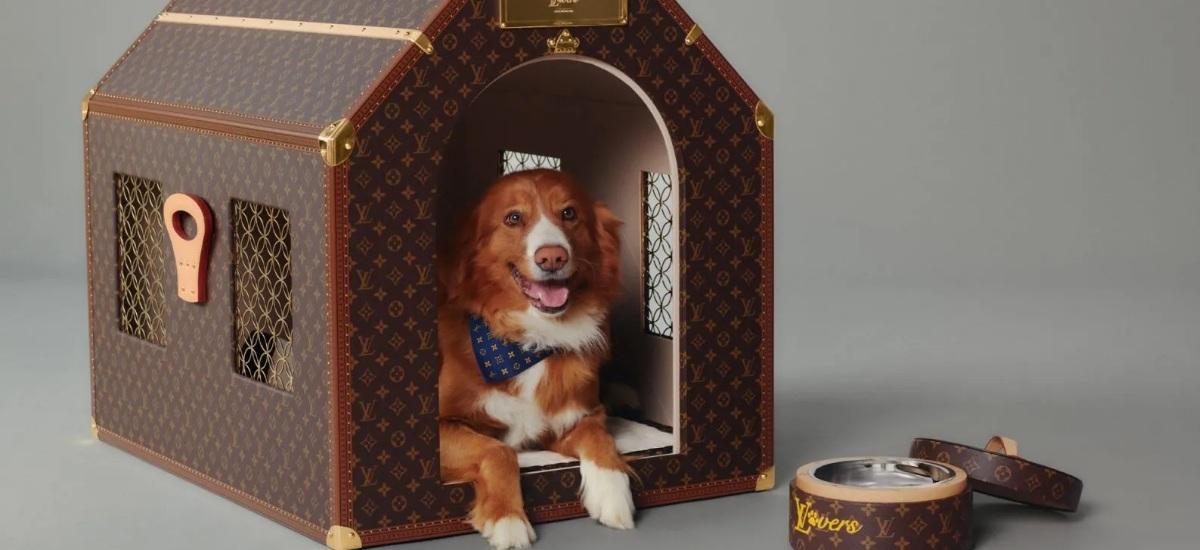
When major fashion houses incorporate a category into their creative universe, they are not following a trend: they are validating a cultural change.
The fact that brands such as Louis Vuitton, Gucci, Prada, Burberry, and Moncler have developed specific lines for pets is not a creative eccentricity or an anecdotal nod to consumers: it is confirmation that the pet phenomenon has ceased to be a niche market and has become a structural category of contemporary consumption.
The luxury industry does not enter emerging markets. It enters when it detects consolidation, recurrence, cross-sectional purchasing power, and long-term projection. And that is exactly what is happening.
The fact that brands such as Louis Vuitton, Gucci, Prada, Burberry, and Moncler have developed specific lines for pets is not a creative eccentricity or an anecdotal nod to consumers: it is confirmation that the pet phenomenon has ceased to be a niche market and has become a structural category of contemporary consumption.
The luxury industry does not enter emerging markets. It enters when it detects consolidation, recurrence, cross-sectional purchasing power, and long-term projection. And that is exactly what is happening.
The dog is now recognized as an extension of identity
In recent years, we have seen how pets have gone from occupying a domestic space to occupying a symbolic space. When Pharrell Williams, as creative director of Louis Vuitton, presented the Dog Lovers collection, he wasn't just launching premium leather collars and carriers: he was integrating dogs into the brand narrative. The message is clear: pets are part of the lifestyle.
In the United Kingdom, specialized publications have documented the rise of exclusive dog clubs, high-end spas, and designer technical fashion. In the United States, major fashion houses have expanded their catalogs to include coordinated accessories, capsule lines, and permanent products in their collections. It's not just about aesthetic luxury. It's about cultural recognition.
Dogs, and by extension pets, are no longer peripheral elements of the home, but rather an extension of their owners' identities. The consistency between how we live, how we dress, and how we care for our animals is part of the same narrative.
The new habits of pet parents. A global phenomenon
The global market for pet fashion and accessories exceeded $11 billion in 2024, with forecasts of sustained growth in the premium segment.
But what is truly relevant is not the figure itself, but the cross-cutting nature of the phenomenon. Luxury represents the tip of the iceberg. In this context, we find:
- Functional and gourmet food.
- Cosmetics and animal wellness.
- High-end pet-friendly hotels and destinations.
- Interior design adapted to human-animal coexistence.
- Insurance, advanced medical services, and healthcare digitization.
What began as an urban trend has spread to multiple social strata. This is not an aspirational market limited to elites; it is a phenomenon that transcends social classes, generations, and geographies.
From the United States to Italy, from France to the United Kingdom, the human-animal bond is no longer private but has become a visible social structure.
A new social and cultural paradigm
The key is not fashion. The key is humanization. The academic field of anthrozoology has been documenting for years how the human-animal relationship impacts emotional well-being, identity, and family structure. Pets now occupy a space that previously belonged exclusively to traditional human bonds.
Fewer children, smaller homes, greater mobility, and digitalization have reinforced the role of animals as the emotional core of the family.
Premium consumption is the consequence, not the cause. When the animal becomes part of the emotional center of the home, purchasing decisions change. Quality, health, sustainability, and ethical consistency are prioritized. Luxury comes into play when the bond is consolidated.
It's not a trend, it's a transition that was bound to happen
Trends are cyclical. Paradigms are structural. The arrival of luxury in the pet world symbolizes something deeper: the definitive normalization of the new pet-friendly culture.
If the phenomenon has reached the big fashion houses, it means that it is no longer experimental or marginal. It is global, cross-cutting, and economically sound.
The question is no longer whether the pet market will continue to grow. The question is how each sector (retail, hospitality, fashion, food, technology) will transform itself by naturally integrating animals into its value proposition.
We are witnessing a cultural transition where the human-animal bond is redefining not only consumption, but also the architecture of our cities, regulations, public spaces, and brand experience. And when luxury validates a phenomenon, it is rarely a passing fad. We are witnessing the confirmation of a change of era.
Sources: Luster, Tempus, Pets2B Consulting.