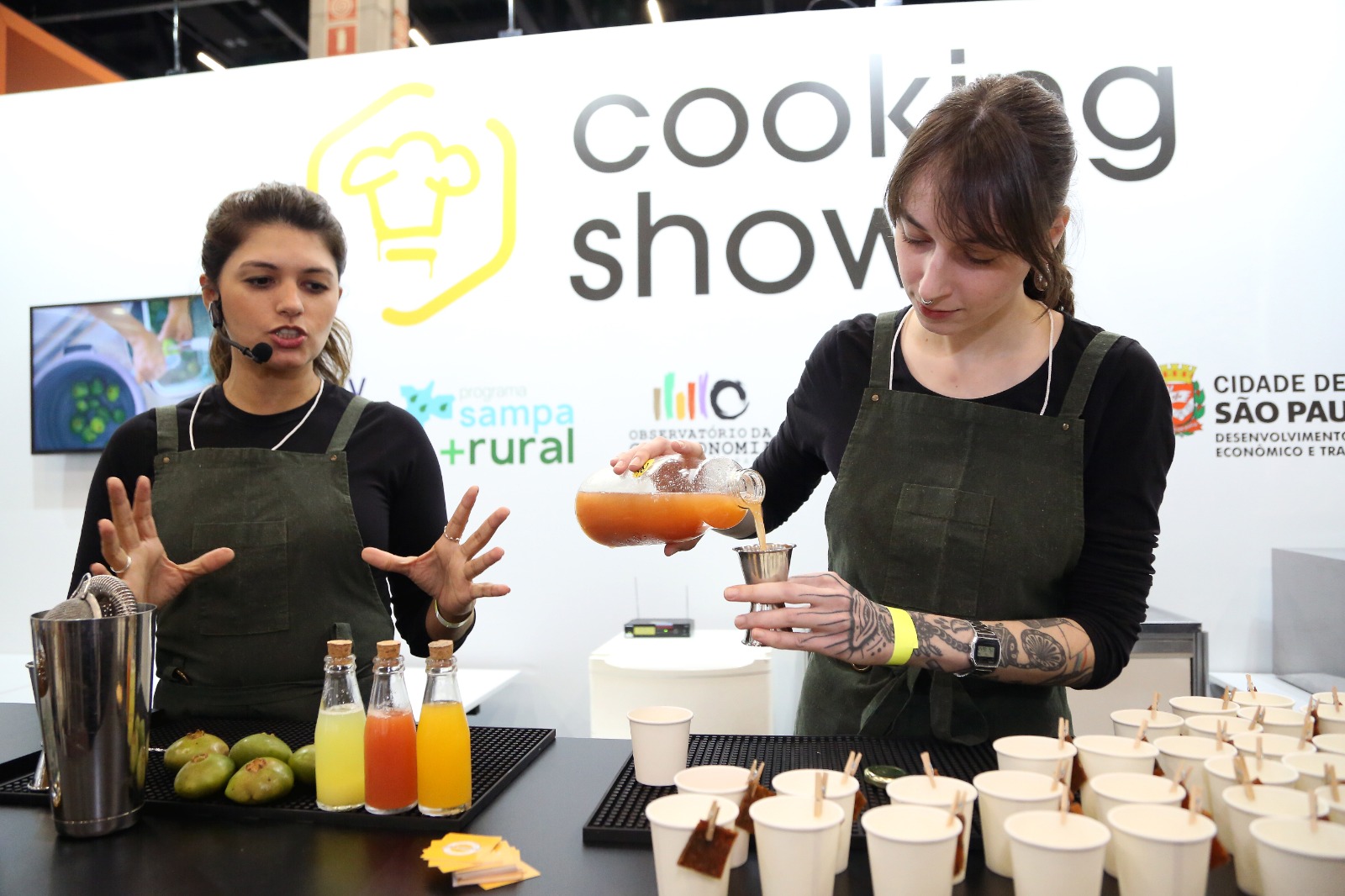
The first edition of Fruit Attraction SP had the support and presence of the City Hall of São Paulo.
The first edition of Fruit Attraction SP had the support and presence of the City Hall of São Paulo.
The Sampa+Rural and Observatório da Gastronomia programs offered product exhibitions and food workshops for visitors.
The Secretariat of Economic Development and Labor of the City of São Paulo, through the Sampa+Rural program and the Gastronomy Observatory group, participated in the first edition of Fruit Attraction São Paulo from April 16th to 18th. The event, recognized as one of the largest fruit and vegetable fairs in the world, brings together exhibitors and visitors to connect the food production and consumption sector, providing an opportunity for training, networking, and the exchange of experiences.
The Deputy Secretary of Economic Development and Labor, Armando Junior, visited the space on the last day of the event and was able to present the initiatives of the City of São Paulo in the context of food.
“For us, it is a great pleasure to participate in and strengthen an event that is ranked among the largest in the world in this segment, a unique opportunity to present our actions and also contribute a little more to the farmers served by Sampa+Rural, who can promote their services and products, as well as create new connections,” declared the deputy secretary, Armando Junior.
Cooking Show Space
The Gastronomy Observatory was one of the organizers of the stand, being responsible for the programming of the 'Cooking Show' space, which hosted chefs and bartenders who created recipes with fruits, highlighting the versatility of the items, which add flavor and healthiness to the products.
On the first day of the event, Chef Ricardo Magalhães, responsible for the monumental cake celebrating São Paulo's anniversary, demonstrated his process for creating artistic cakes using fruit. During the afternoon, sommelier and bartender Gerson Bonilha Jr. spoke about the traditional caipirinha, a drink that has been part of the International Bartender Association since the 1990s. The expert also discussed the importance of valuing Brazilian and global cocktail culture.
On Wednesday, the seasonality of persimmons was highlighted by chef Guilherme Cardadeiro, from the NGO Chef Aprendiz, in his recipe for skillet bread canapés with persimmon chutney and ricotta cream with edible flowers. The chef emphasized the importance of valuing family producers, not only for environmental reasons, but also for social ones. Following this, bartender Kascão Oliveira prepared the Caipitreme cocktail (cachaça with jambu, a herb that numbs the mouth, lime, key lime, lemon, and rapadura syrup) and the Pai d'égua cocktail (cachaça with jambu, cupuaçu, simple syrup, and lemon juice).
On the final day of the event, the Cooking Show welcomed chef Vinícius Rojo, from Catering Rojo Gastronomia, who presented Açaí from the Atlantic Forest, made from juçara pulp. The audience was impressed by its similarity to traditional açaí, which has a similar texture and flavor. In addition, the chef spoke about his experience in the reforestation of the Atlantic Forest. Through the social catering company Go Mama, the chef carries out a reforestation project in the Atlantic Forest using juçara palm trees, supported by Atlas Florestal.
The task of closing the Cooking Show program fell to bartenders Adriana Pino, world champion of cocktail making at the World Class Competition, and Manuela Parise, who presented high-end Brazilian mixology with the drink "Andar com Fé" (Walking with Faith), made with cachaça, cambuci, lemon, and pineapple.
Some of the bartenders and chefs purchased products and fruits from exhibitors participating in the Sampa+Rural program, who shared the São Paulo City Hall booth with the Cooking Show.
Exhibition and connection of farmers – Sampa+Rural
In addition to the Cooking Show, the São Paulo City Hall booth provided space for the exhibition and contact with farmers served by the Sampa+Rural program. Among them are farmers from Recanto Magini, specialized in the production of cambuci, uvaia, and juçara, fruits typical of the Atlantic Forest. The producers use the fruits to make jams, liqueurs, and cachaça, which are sold at different points in the city.
Another group of farmers who were able to exhibit their products is the Murakami Orgânicos collective, also from Parelheiros, considered one of the pioneers in organic banana production in the city of São Paulo. Also participating were producers from Sítio Campo Verde, specializing in rural tourism and blueberry production, and Sítio Vida, who have expertise in persimmon production.
About the Gastronomy Observatory
The Gastronomy Observatory is a space for collaboration aimed at strengthening the food and gastronomy chain. Working together with all those who operate in this sector, the Observatory aims to enhance aspects related to the economy, culture, food security, and sustainability.
The Gastronomy Observatory operates through thematic committees – Image and Gastronomic Heritage of São Paulo, Social Gastronomy and Sustainability, Qualification and Professional Inclusion, and Street Food – which aim to unite the expertise of various stakeholders in order to enhance the search for solutions in the food sector.
About the Sampa+Rural Program
The Sampa+Rural Program includes actions aimed at expanding Technical Assistance and Rural Extension, integrating beneficiaries of the POT – Work Operation Program, also from the São Paulo City Hall, into the agricultural sector, in addition to structuring 400 agricultural sites in the capital. The Agriculture Coordination, responsible for the program, has three CAEs – Ecological Agriculture Houses in the South, East and North zones, with the latter also responsible for serving the districts in the central, West and South urban areas.
Furthermore, the initiative includes a Bio-inputs Demonstration Unit, located in Parelheiros, which produces, trains, and offers biofertilizers and organic compounds useful for crop protection, pest control, soil fortification, and much more. Learn more about the work of the São Paulo City Hall's Agriculture Coordination Office by clicking here or follow them on Instagram. @agriculturaprefsp
Source: City Hall of São Paulo


