


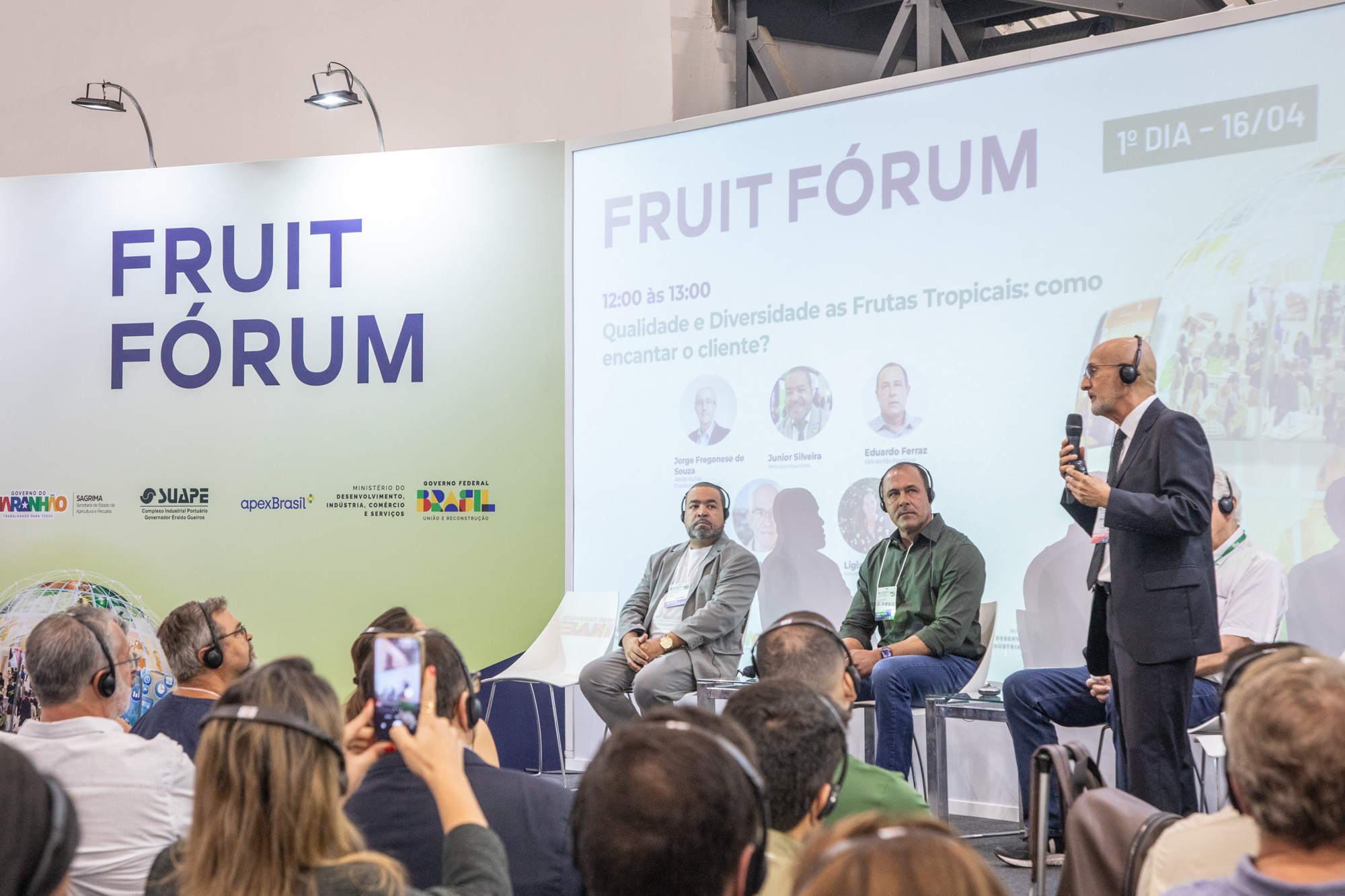
Fruit Attraction São Paulo will discuss challenges and opportunities for the expansion of Brazilian fruit farming in international trade.
Fruit Attraction São Paulo will discuss challenges and opportunities for the expansion of Brazilian fruit farming in international trade.
The fair takes place from March 25th to 27th at São Paulo Expo, in the city of São Paulo.
THEThe challenges and opportunities for expanding Brazilian fruit farming in international trade in the face of a more protectionist global agenda will be discussed at the Fruit Forum, a content-driven congress organized by Fruit Attraction São Paulo. https://www.ifema.es/fruit-attraction-sao-paulo -, which takes place from March 25th to 27th at São Paulo Expo, in the city of São Paulo.
In addition to showcasing products, technology, and services, Fruit Attraction São Paulo will also host the Fruit Forum, a space for debates and presentations that will bring together researchers, entrepreneurs, and specialists to discuss topics related to innovation and potential markets in the fruit and vegetable segment. This edition will feature the participation of Marcos Jank, coordinator of Insper Agro Global and one of the leading experts in Brazilian agribusiness.
“The Trump administration’s measures address a framework for international trade – including agricultural trade – that is more anchored in geopolitical decisions than in negotiations based on market fundamentals,” Jank points out.
The vice-president of the Brazilian Association of Fruit and Derivative Producers and Exporters (Abrafrutas), Waldyr Promicia, adds: “Brazilian fruit farming has supply, diversity, health, quality, and sustainability, and we could export much more, since we have the potential to double or triple our production, satisfactorily ensuring domestic supply and generating exportable surpluses. However, there is the challenge of opening new markets and trade protectionism.” Promicia sees the Mercosur-EU agreement positively for Brazilian fruit exports. “Our fruit farming meets all the requirements of good practices established by the Europeans; we are well-positioned from the point of view of socio-environmental commitments, with the adoption of reputable certifications.” According to the director, Brazilian fruits still face tariffs ranging from 4% to 14% to enter the European market. “With the new treaty, these tariffs will be partially or totally eliminated.”
According to the CEO of Fiera Milano Brasil, one of the co-organizers of the event alongside the Madrid Trade Fair Institution (Ifema), Maurício Duval Macedo, Fruit Attraction São Paulo is moving towards consolidating itself as the main event in the fruit and vegetable segment in the Southern Hemisphere. “We will have the participation of 400 exhibiting brands, both national and international, from more than 18 countries; an expected visitor audience of between 15,000 and 20,000 people; business roundtables, promoted with the support of Apex and Sebrae; a total exhibition area increasing from one to two pavilions; and an estimated RTP4T 1 billion in sales,” emphasizes the executive.


