


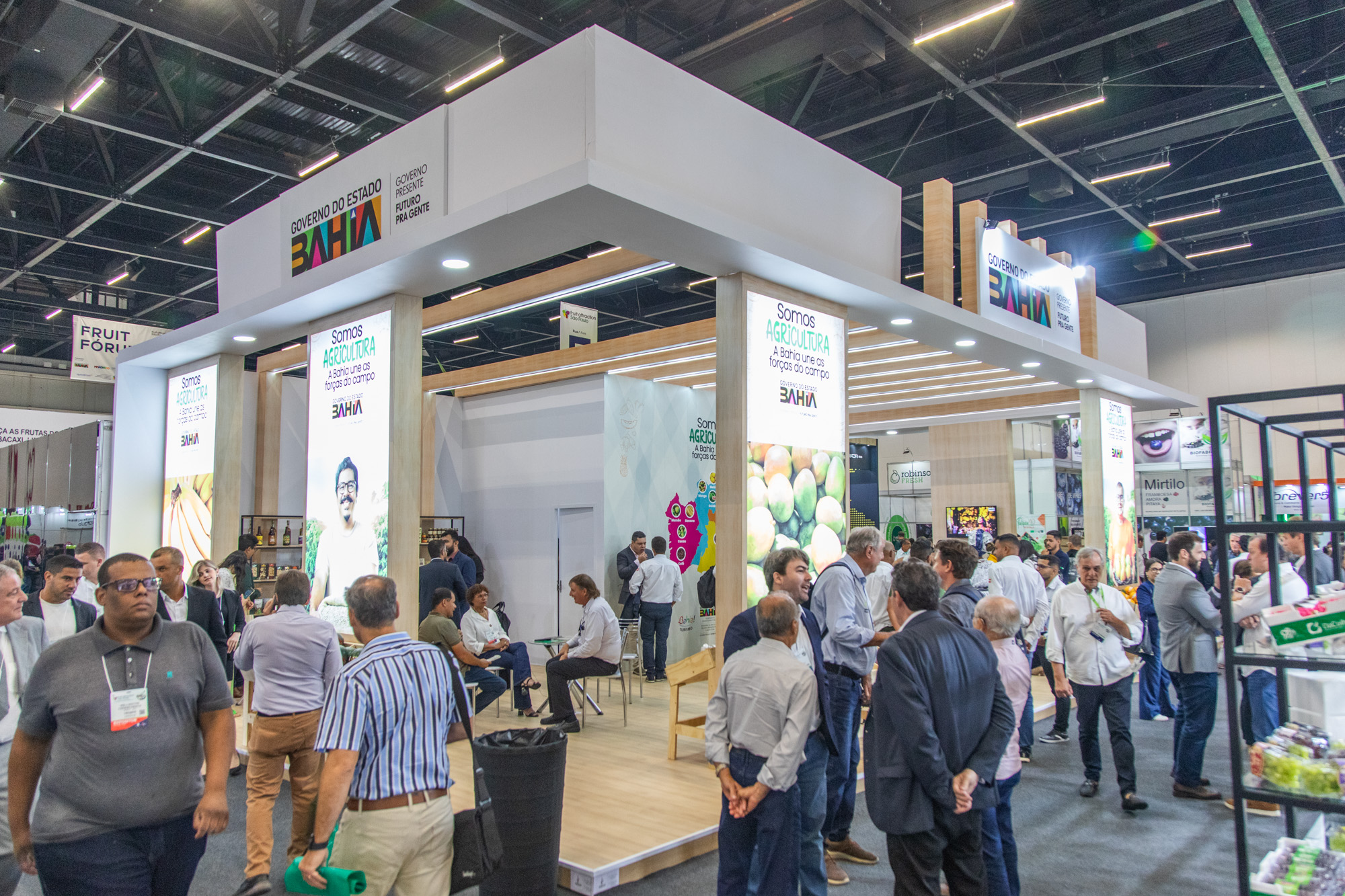
Bahia: Leader in Productivity and Exports in National Fruit Production
Bahia: Leader in Productivity and Exports in National Fruit Production
Bahia stands out as a beacon of success in national fruit farming, with consolidated export hubs and high productivity rates in irrigated areas, especially in the North region. In 2023, exports of Bahian fruits exceeded US$253,649,932, generating a financial flow of approximately R$1.3 billion. The main markets for Bahian products were the European Union, the United States, and the United Kingdom.
The expansion of fruit farming in Bahia is driven by a combination of favorable climate, available areas for irrigation, and the possibility of obtaining two or more harvests per year. In addition to tropical fruits such as grapes and mangoes, the altitude of the Chapada Diamantina has attracted producers to cultivate temperate climate fruits such as plums, strawberries, persimmons, and grapes for the production of fine wines.
In 2023, Bahia accounted for 19% of national fruit exports, exceeding the value exported in 2022 by 55%. The fresh fruits from Bahia that were most sold abroad in 2023 were mangoes, followed by grapes, lemons and limes, and papayas.
Bahia is the largest mango producer in Brazil, with a production of 663,814 tons in 2022, and the fourth largest grape producer, with a production of 75,664 tons. In 2023, Bahia exported the equivalent of 126,011,036 kg of mangoes, exceeding the volume exported in 2022 by 18,211 tons, and generated US$155,456,654 from the export of this fruit. The main destinations for Bahian mangoes were the Netherlands, followed by the United States, Spain, and the United Kingdom.
The Secretary of Agriculture of Bahia, commenting on the success of fruit farming in the state, highlighted: “This is a result of the hard work of our producers and the commitment of the state government to provide the necessary support to ensure that Bahia continues to be a leader in fruit production. We are committed to continuing to support our producers and promoting sustainability in our agricultural industry.”
Since April 2023, technical cooperation agreements signed between Seagri, the Brazilian Micro and Small Business Support Service (Sebrae), the National Rural Learning Service (Senar), and the Brazilian Association of Fruit Producers and Exporters (Abrafrutas) have provided guidance and monitoring of the fruit fly, the main pest threatening mango plantations in the northern region of Bahia. Three million reais were invested, through three cooperation agreements, in this work to combat the fruit fly.


