


Brazil Could Export Much More Fruit Than Just US$ 1.2 Billion
Brazil Could Export Much More Fruit Than Just US$ 1.2 Billion
Opening new markets and promoting the sector's potential are Abrafrutas' goals to increase shipments; trade fairs like Fruit Attraction are the way to do this.
How can we explain Brazil being the third largest fruit producer in the world and ranking 23rd among exporting countries? This is the gap that the Brazilian Association of Fruit and Derivative Producers and Exporters (Abrafrutas) seeks to fill. "Few bilateral agreements are made to export fruit," Waldir Promicia, founder and director of Abrafrutas, told Forbes.
In 2024, Brazil exported approximately 1 million tons of fruit, generating revenue of US$1.2 billion (R$7 billion at the current exchange rate). This amount represents an increase of 3%, although with a slight reduction of 0.85% in the total volume exported, compared to 2023.
“We are a major exporter of fruit, especially mangoes, lemons, melons, and grapes. We just need a market to export to, and we will be able to produce, because we have more than 2.6 million hectares dedicated to fruit growing,” says Promicia. “Brazil’s potential is frightening to any competitor. We just need to put the country on the international map.”
The task depends less on production and more on the progress of negotiations between the Brazilian government and other countries. “We lack open markets and simplified regulations and bureaucracy. Brazil has never pursued a policy to expand fruit exports because we have been held hostage by a large domestic market,” says Promicia.
Currently, the largest buyers of Brazilian fruits are countries in the European Union, especially Germany, England, and the Netherlands, as well as countries in Asia, such as the United Arab Emirates, and the United States. According to Promicia, shipments to the latter are still modest.
“It’s a matter of internal policy. We export Tahiti limes to our neighboring country, Canada, but not to the USA,” he says. According to him, the United States is the largest importer of the fruit produced in Mexico, whose supply runs from June to December. “From January to June, Mexico doesn’t have these limes, and during that period we have surpluses in Brazil, meaning we could send that volume to the USA. We’ve been trying to get into the US market for 20 years.” His dedication to the fruit is not without reason. Promicia is an organic Tahiti lime producer on a 1,000-hectare property in Inhambupe, 153 kilometers from Salvador, Bahia.
To change this scenario, Promicia believes that the Brazilian government needs to be firmer in negotiations to open new markets. But the process also needs to be more effective. “We send a request to some countries and they take about two years to respond. We need a political actor to exert pressure as well.”
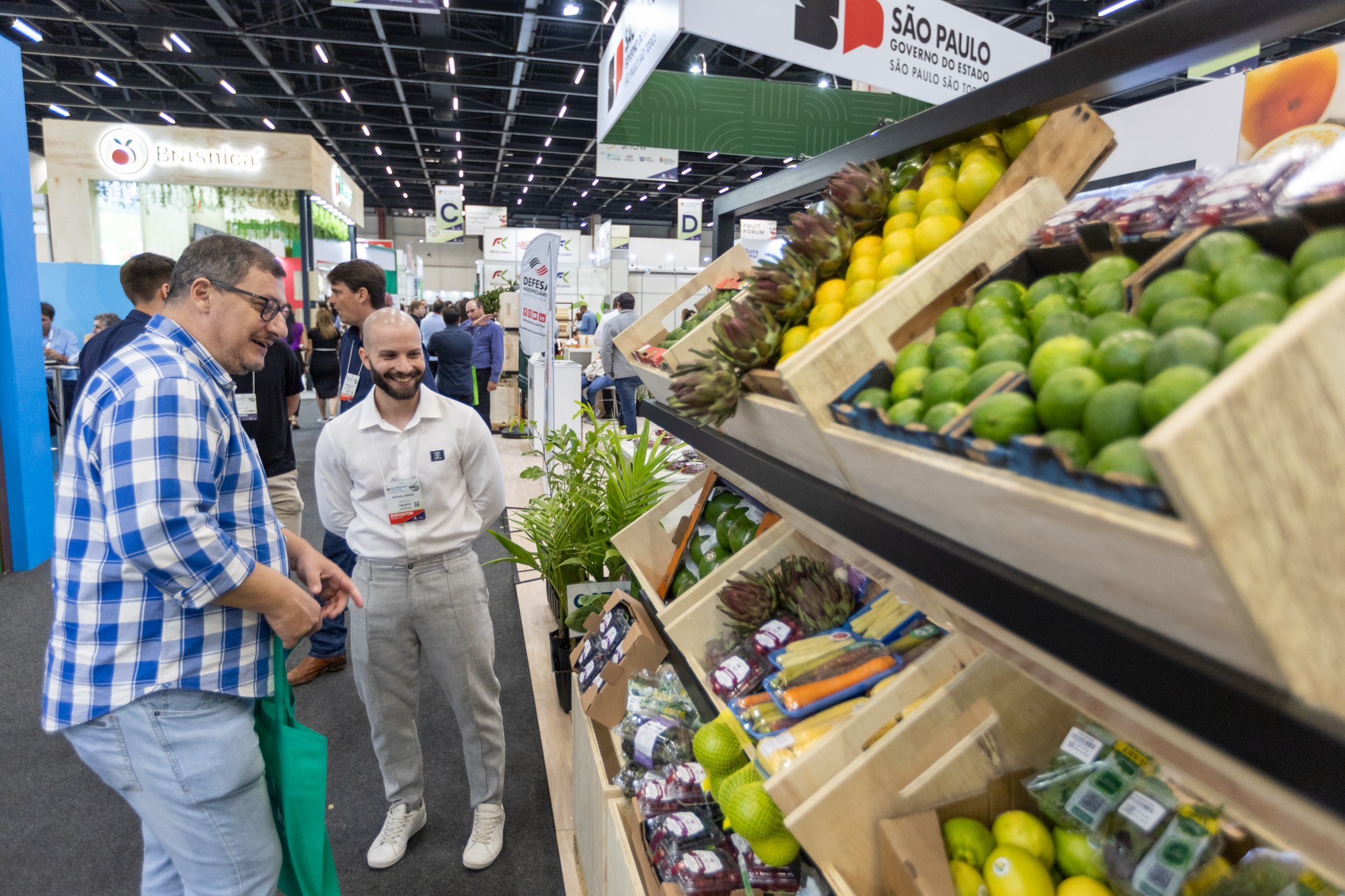
He also highlights the importance of showcasing the potential of Brazilian fruit farming to the world, with greater promotion and participation of industry members in events such as Fruit Attraction São Paulo, an international fruit and vegetable fair that brings together exhibitors, buyers, and industry experts.
The event is held annually in Madrid, Spain, and had its first edition in São Paulo last year. “These fairs are a great opportunity because the customer comes to my home to see my product. That makes all the difference,” he says. The next fair in São Paulo will take place from March 25th to 27th at São Paulo Expo, and is consolidating itself as one of the main platforms for the fruit and vegetable sector in Latin America. In its first national edition, the event brought together approximately 12,000 visitors from 45 countries, including 300 exhibitors from 15 countries. Business transactions totaled approximately R$1 billion.
SOURCE: Forbes


